



*Free 19+ Courses
*Free 19+ Courses English and Maths – Contact the centre today.
*Free level 1 construction courses for the unemployed CSCS training cards for 19+ - Contact the centre today.
Are you looking to upskill and gain a qualification?
You can start courses at anytime with PGL Training, including evenings and weekends.
For more information just hit the button below and contact us now.
* Free for 19+ funding subject to eligibility.


PGL Training
1PGL Training are specialist providers of Apprenticeships and training in Hairdressing, Beauty, Barbe

📣Recruit with PGL Training📣
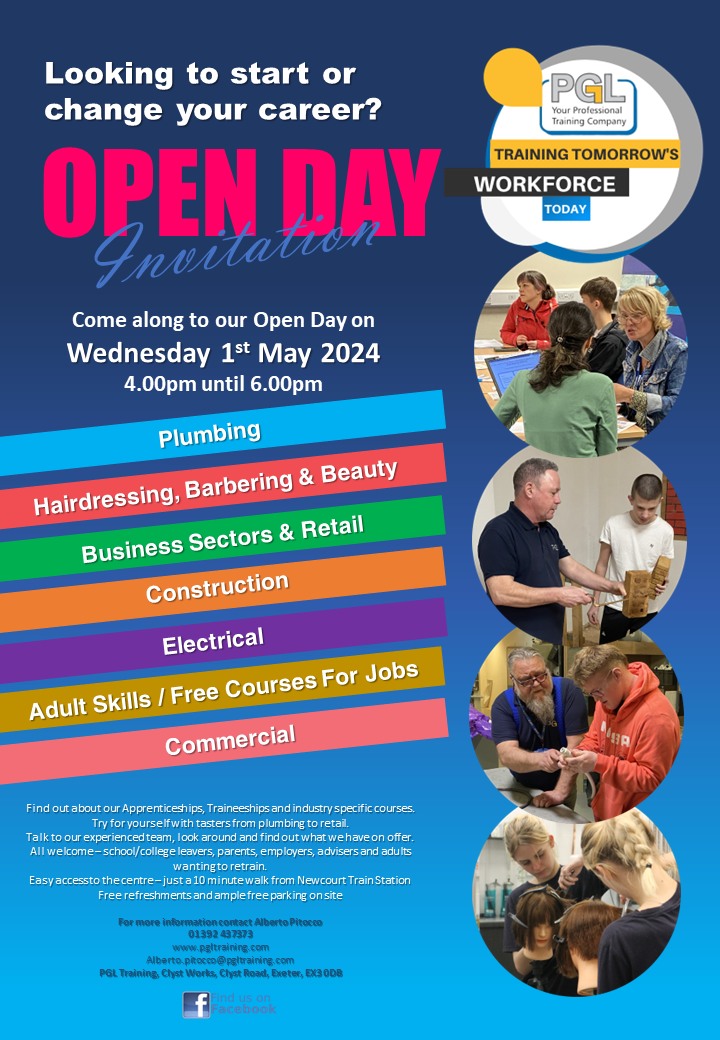
See below on how we can help you as an employer! Come along to our Open Day on 1st May 2024!
For more information contact the centre and ask for Samantha or Alberto- 01392 437373
0 CommentsComment on Facebook
PGL Training offers a career advice session every week on a Tuesday from 9.00 am-12.30 noon. This is a drop-in session to support with CV writing, job search, interview skills and much more. Please contact our designed team for more information- 01392 437373 or email alberto.pitocco@pgltraining.
Everyone is welcome. We also offer Advice and Guidance sessions at Exeter Job centre on a weekly basis.
1 CommentComment on Facebook
Samantha Barry Fiona Hargreaves Terry Sanford
Great day yesterday at our Exeter Hairdressing Academy at PGL Training
We are looking forward to meeting new Hair salons in Torbay this afternoon.
For more information on apprenticeships, full time and part time courses please call the centre- 01392 437373.
1 CommentComment on Facebook
Tayler Bailey
L3 ADVANCED AND CREATIVE HAIR PROFESSIONAL- PGL Training
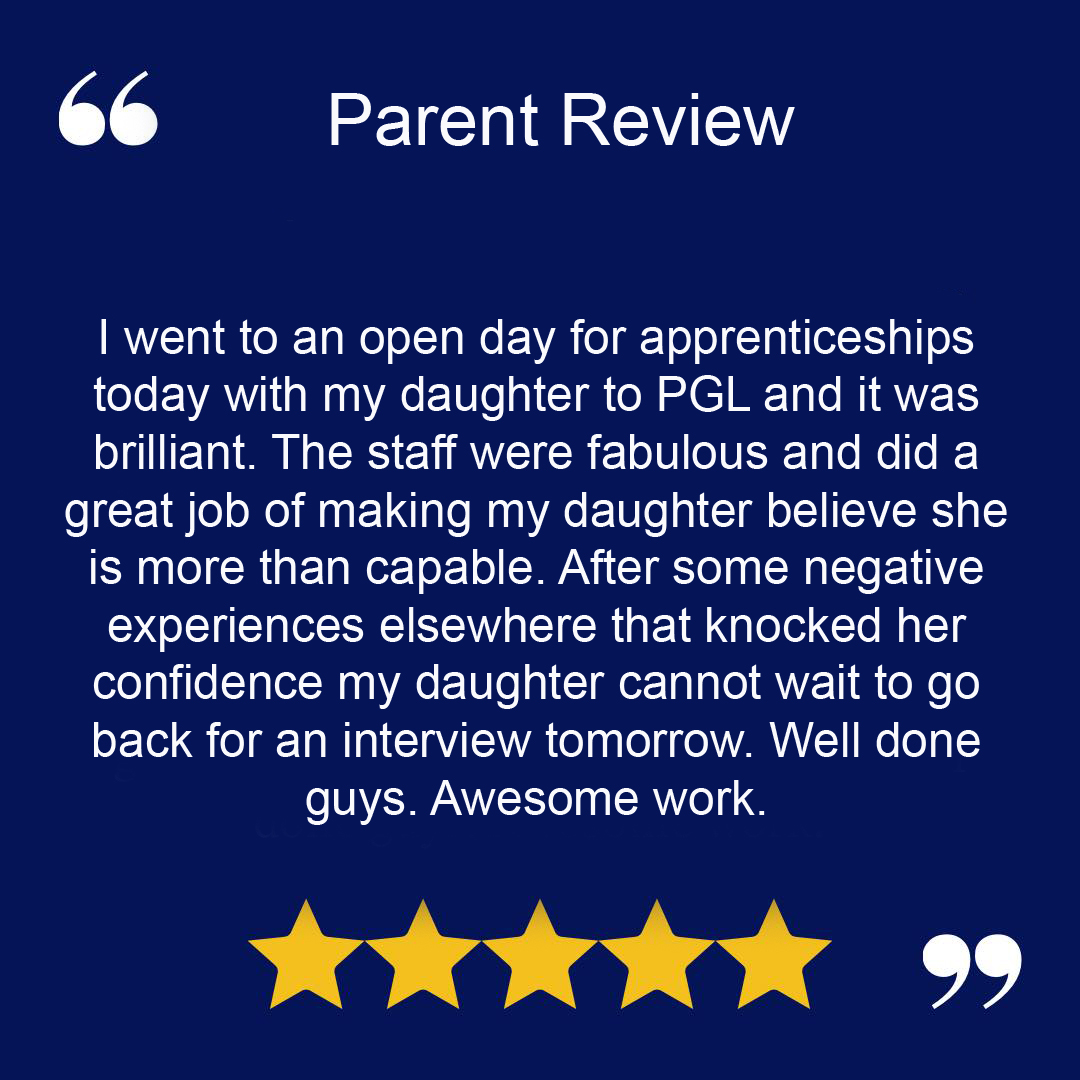
PGL Training are pleased to continue to offering the new L3 Advanced & Creative Hair Professional qualification. This is the perfect qualification for existing or new employees to gain further skills after completing their Level 2 Hairdressing qualification.
With Academy and bespoke in-house training available now is the perfect time to upskills. PGL Training works with Hairdressing employers across the Southwest.
Funding also available for 19 plus learners.
pgltraining.com/hairdressing-barbering-beauty-apprenticeships/
For more information please contact Alberto on 01392 437373!0 CommentsComment on Facebook
Congratulations to our March cohort of Plumbing Apprentices which have achieved distinctions in their final exams- EPA.
PGL Training are pleased to continue to deliver all pathways for the Plumbing Level 3 standard to include Gas, Oil and Renewables.
For more information please contact Alberto on 01392 437373.
19 plus funding available!
0 CommentsComment on Facebook
PGL Training are pleased to have signed up two new Bricklaying Apprentices with a local company based in Exeter.
For more information or Brick Apprenticeships or 19 plus courses please contact Samantha Barry on 01392 437373!
0 CommentsComment on Facebook



All content copyrighted PGL Training © All rights reserved * Free 19plus courses subject to eligibility