


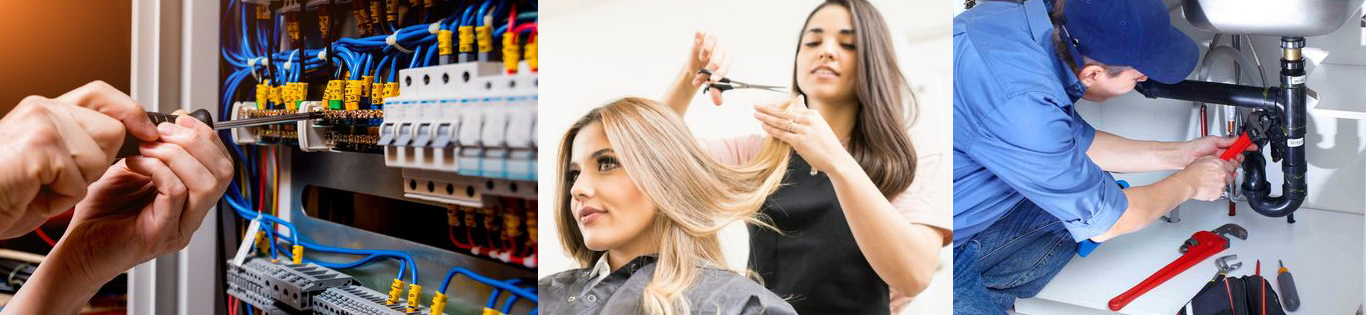
PGL Training is committed to Work-Based Learning for young people and adults across a wide range of nationally recognised qualifications at all levels.
In partnership with employers we aim to ensure that young people undertake quality training both in the workplace and at the centre. There are no barriers to anyone undertaking a training programme on grounds including gender, ethnic origin or disability. PGL Training is committed to equality of opportunity for all learners and promotes equal treatment regardless of race, gender, disability, religion, age or sexual orientation.
Training Programmes
There are two funded employed apprenticeship programmes:
Apprenticeship (App) which leads to an NVQ Level 2 in the chosen subject, a Technical Certificate and a number of Key Skills awards.
Advanced Apprenticeship (AAp) which leads to an NVQ Level 3 in the chosen subject, a Technical Certificate and a number of Key Skills awards.
The Benefits to An Organisation
Promotion of training will increase the company’s skilled and qualified workforce; it will encourage and motivate the existing workforce and enhance the organisation’s performance. Training will up-date skills and keep the employer and workforce in touch with modern developments and technology. If an employer is seeking to follow Investors in People or ISO9001 it will enhance the quality assurance programme.
Responsibilities of the Employer
Each employer is required to:
Our Apprenticeship Terms and Conditions document contains full details of the responsibilities of the employer, apprentice and PGL Training.
Recruitment and Selection
An employer will interview and select the learner he/she feels is most suitable to work within the organisation. PGL Training can assist in referring learners for recruitment purposes.
We are able to advertise a company’s Apprenticeship vacancy on the PGL Training website, the National Apprenticeship website and through the Cornwall and Devon Connexions vacancy bulletin.
Duration of Training
If a learner is studying an Apprenticeship the duration of the training will be approximately 24 months, depending on the level of prior experience.
If a learner is studying an Advanced Apprenticeship the duration of the training will be approximately 36 months, depending on the level of prior experience.
It is possible for a learner to progress from an Apprenticeship to an Advanced Apprenticeship, in which case the apprenticeship would be for 24 months and the advanced apprenticeship for 12 months.
The Costs Involved
Training for 16 – 18 year olds is fully funded through the Learning and Skills Council. For those learners aged 19 or over there is an employer contribution payable towards the cost of training – please call for further details.
The Learning and Skills Council (LSC) promotes Work-Based Learning. When an organisation employs an apprentice he/she should be paid the going rate for the job they do. This amount should not be less than £95.00 per week.
A learner aged 19 or over at the outset of training should be in receipt of at least the minimum payment of £95.00 per week, rising to an amount equivalent to the national minimum wage after 12 months on programme.
Apprenticeship Frameworks
Apprenticeships consist of the following qualifications:
National Vocational Qualification (NVQ)
NVQs are nationally recognised qualifications specific to a range of occupations. They are competence based and candidates demonstrate the ability to perform a range of activities and the underpinning knowledge required to support their claim to competence.
Technical Certificate
A Technical Certificate examines the underpinning knowledge of the subject area. A Technical Certificate is usually externally tested and is a major component of an Apprenticeship qualification.
Key Skills
(Application of Number, Communication and, where required, Information Technology)
Key Skills form an integral part of the practical work and naturally occur whilst the learner is carrying out activities both at the Centre and in the workplace. Key Skills units bring together the range of skills that employers feel are important attributes of effective employees.
Employment Rights and Responsibilities and Additional Requirements
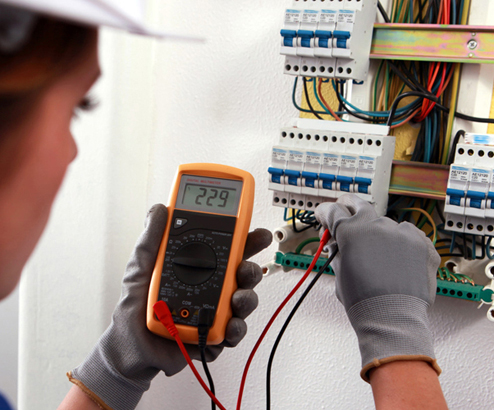
All learners are required to undergo a training programme incorporating employment rights and responsibilities. There are also additional requirements for specific frameworks such as electrical where learners are required to pass the AM2 test. Full details for individual frameworks are available from the Centre.
Delivery and Support
For all programmes PGL Training will provide the following services to learners:
Training workshops are held at our local centre offering theory, underpinning knowledge, task assignments and candidate support.
Training is structured around the relevant NVQ, Technical Certificate and respective Key Skills.
Usual frequency of training workshops is once a week.
During the programme our Training Officer will visit each candidate in the workplace to review progress against their Individual Training Plan and liaise with mentors and supervisors. Guidance and support will be provided throughout the programme to enable ultimate achievement of the award.
Assessments will take place at mutually agreed times to determine and confirm a candidates’ progress and competence set against the national standards. This is achieved by two main methods:
Formal observation in the workplace. There will usually be a minimum of 4 visits during the period of the course.
Examining other evidence compiled within the portfolio, e.g. witness statements, photographic evidence, previous training received, reports and certificates of achievements.
On successful completion of their programme, apprentices will be issued with certificates for their respective NVQ, Technical Certificate and each Key Skill undertaken. They will also receive the relevant Sector Skills Council apprenticeship framework certificate.